The Final Assembly Line (FAL) of a new airplane is when all the significant components, like wings, come together and build a fully functional aircraft. The process is long, complex, and fraught with tension because FAL is primarily manual. The digital solutions that follow help aerospace workers meet deadlines while adhering to the industry’s strict quality and safety standards.
Why Automation Doesn’t Fly With Aerospace Final Assembly Line
FAL in aerospace brings all the major aircraft parts, such as fuselage sections, wings, and engines, together and assembles them into a working plane. Unlike most manufacturing industries, such as automotive, where the processes are primarily automated, FAL for aircraft is performed manually.
Reasons include:
- The components are massive. Fuselage lengths can range from around 120-138 ft to 223-250 ft, far too large and heavy to move down assembly lines (never mind lifting them!).
- Orders for new aircraft are too small to benefit from economies of scale. Airbus aims to produce between 850 and 900 new aircraft this year, with plans to increase to 1000 annually in 2026. Compare that to the automotive industry, which produces millions of vehicles per year.
- Aircraft are incredibly complex, with miles of wiring and tubing alone that require human dexterity to install correctly, something automation simply can’t replicate. The same is true for small components like fasteners, which number between 1 and 3 million on a Boeing plane alone and must be assembled by hand.
To address the above challenges, aerospace companies have refocused their innovation efforts, such as digital technologies and robotics, to support workers during FAL rather than replace them, as in other industries.
Digitally Equipping Workers in the Final Assembly Line
Conveyor systems, assemblers, and other large-scale automation commonly found in manufacturing have, literally, no place among aircraft assembly line equipment. Digital solutions instead bolster workers by making vital information easy to access and by providing support for more strenuous tasks, such as painting.
Industrial Tablets
Assemblers and inspectors are the primary workforce during the final assembly line of the new aircraft. Assemblers work from assembly diagrams, such as instructions, parts lists, blueprints, etc. Inspectors also use detailed inspection documents for reviews, which they sign off on.
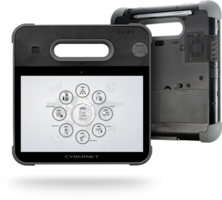
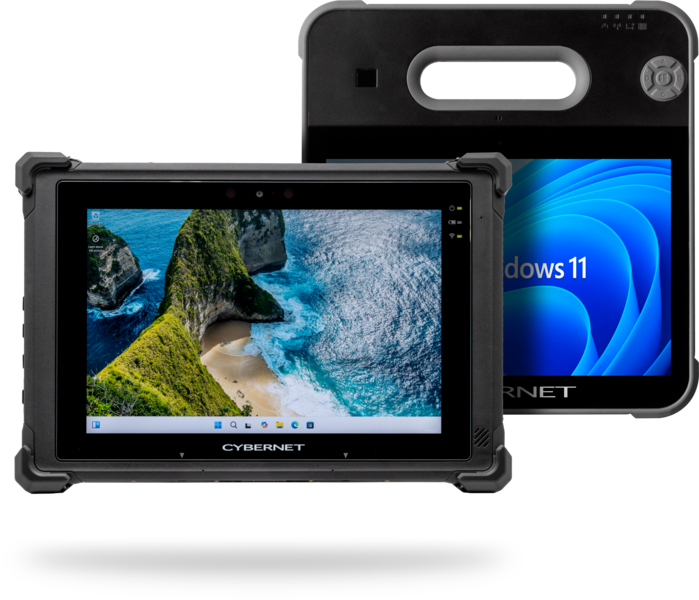
In the past, both carried paper copies of all their required documents. Today, they store such vital information on rugged industrial tablets. These portable computers house those diagrams and documents, making them easy for assemblers and inspectors to access as they complete their tasks.
Augmented Reality
Each part of the new plane must be precisely installed, whether it’s the massive wing or the tiny fasteners that hold a panel in place. Training workers to do so can be a long affair, worsened by custom requests from a client or the introduction of a new design.
Aerospace manufacturers are introducing augmented reality (AR) and other forms of mixed reality systems to train workers. AR goggles, for example, can project 3D instructions (such as wiring diagrams) directly onto the components. Workers then simply follow them step by step to completion. Or they may be trained on virtual versions of the specific parts until the process becomes second nature.
Paint Spray Booths
Like all tasks during FAL, painting a new airplane requires absolute precision, as the paint performs multiple roles from protecting the aircraft from UV light to enhancing its aerodynamics during flight. Yet painting is hazardous, with fumes from paints, primers, and other chemicals, as well as particulates, posing risks to workers' health.
Paint spray booths are the solution for this essential task. Many have their humidity, temperature, airflow, and pressure monitored and controlled by rugged mini PCs, ensuring the worker inside is protected. Their paint and application systems are also controlled by the computers, so that the chemicals used meet the plane's area, color, and finish requirements.
Robots
Although the aerospace industry can’t use automation in the same way as other manufacturers, companies have integrated aspects of the technology into specific applications, such as FAL. Two examples of aerospace automation include:
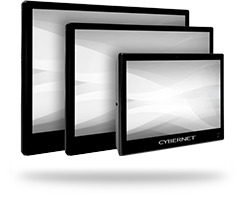
- Multi-purpose painting robots, guided by industrial panel PCs, perform washing, drying, painting, and polishing with little to no human supervision.
- Riveting robots, which perform routine drilling and riveting tasks, freeing human assemblers so they can handle similar tasks requiring more finesse or customization.
- Automated sealant applicators, which follow a programmed path to apply sealants (examples: silicone, epoxies) to joints, seams, and surfaces.
- Collaborative robots (cobots) with built-in advanced sensors, such as machine vision and thermal imaging, that work with human inspectors to detect faults, breaks, and other issues in the aircraft during final assembly.
Aerospace Computers As Part of Aircraft Assembly Line Equipment
The intense environment of the final assembly line not only pushes workers to their limits but also the equipment. Digital technologies, from the tablets carried by workers to mini PCs controlling machinery, should be aerospace computers, as they’ve been built specifically for the industry.
- Built from the inside out with components tested to MIL-STD-810G standards, allowing the computers to handle everything from being dropped on the hard hangar floor to constant bumps within the tight spaces of the fuselage.
- The front bezels of aerospace and similar industrial computers are sealed to prevent dust and liquids from entering and damaging the internal circuitry. This seal, or Ingress Protection (IP), should be at least IP65 to ensure minimal protection.
- Finally, the computers should be highly reliable, with as low a failure rate as possible. Most FALs operate under tight deadlines, and a breakdown of critical computers, such as those that manage paint systems, could result in costly delays for the aircraft manufacturer.
Let Cybernet Computers Support Workers Complete FAL
Aircraft manufacturing is large-scale and, unlike most industries, relies heavily on its workforce rather than automation. This is especially true during Final Assembly Line (FAL), when the major aircraft components—wings, engines, and fuselage—are assembled. Computers aid workers, from tablets holding vital instructions to automating hazardous tasks such as painting.
Contact Cybernet Manufacturing if your aerospace manufacturing facility wants to bring more digital assets to the final assembly stage of new planes. Our team will be happy to explain how our industrial computers, tablets, and other computers serve multiple roles in the industry.