The healthcare industry faces a growing challenge: too many patients, too few healthcare providers, and too little time. Implementing chatbots in healthcare can help bridge the gap between these issues by giving patients a quick and efficient answer to their questions that also spares providers time for other, more demanding tasks.
How Are Chatbots Used in Healthcare?
Chatbots are a form of artificial intelligence, computer software programs that can interact with humans through text. More modern chatbots use advanced artificial intelligence and machine learning to simulate human-like communication. By training on large amounts of data, AI-powered chatbots can discuss a wide range of topics in depth and speak in a human-like manner, with nuance and flexibility. Modern chatbots are used in healthcare for both patient- and provider-facing roles.
Patient-Facing Roles
Chatbots are most frequently deployed in healthcare to assist patients with basic medical needs and administrative tasks. For example, if a patient is feeling ill but doesn’t want to take the time to go to a clinic or hospital, they can consult with their healthcare network’s chatbot about what symptoms they’re experiencing and how they could address them. Chatbots can also be used for basic scheduling and paperwork roles, such as during the check-in process or setting up the patient’s next appointment. They can also schedule reminders for the patient the week or day before the appointment to help ensure they don’t miss it. This spares healthcare providers and administrators from having to do so, letting them focus on more complicated tasks that still require a human’s attention.
More advanced AI-powered chatbots can also be used for health monitoring and fitness goals. Users can upload their personal health information and data from various wearables for the chatbot to analyze, allowing it to suggest workouts, dietary changes, and motivational messages.
Provider-Facing Roles
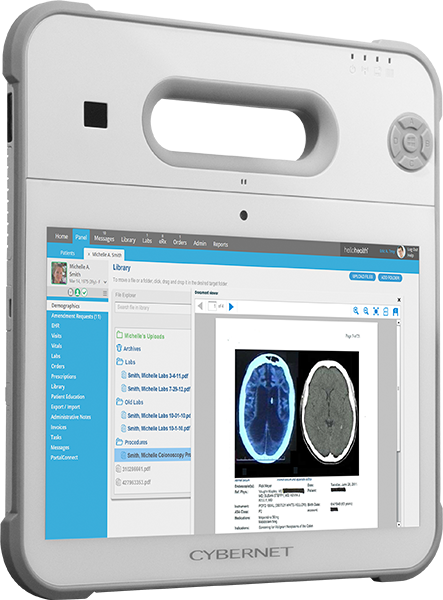
For providers, chatbots are primarily used to automate tasks and accelerate their workflows. A chatbot can automatically retrieve a patient’s EMR on the provider's medical computer, rather than requiring the provider to search for it manually. Chatbots trained on medical data can also provide feedback and opinions during the diagnostic stage. By feeding a patient’s information into the chatbot, the AI can compare it against its training data to generate a potential diagnosis.
Benefits of Using Chatbots for Healthcare Workflows
By embracing chatbots for various roles in their operations, healthcare groups can reap numerous benefits, including:
Better Patient Engagement
Chatbots have proven to be a more comfortable and accessible method for patients to get information and reach out to their providers than the answering machines and email boxes of old. Chatbots are able to connect with patients more consistently, ensuring that they miss fewer appointments and are better-informed about their condition and treatment plans.
Lighter Workload for Employees
By managing basic administrative tasks like scheduling and sending appointment reminders, chatbots can take some of the workload off the shoulders of providers and administrative workers. This allows them to focus on tasks that demand a human’s capability for adaptation and creative thinking, such as actually treating patients or untangling paperwork errors.
24/7 Availability
One of the most significant advantages of chatbots is that they never get tired, never need to sleep, and never call out sick. This makes them perfect for any task that requires constant availability but doesn’t demand much in the way of skill or adaptability. A chatbot can respond to a patient feeling ill at 2 AM, even while their provider is fast asleep.
Cost Savings
Implementing chatbots in healthcare saved an estimated $3.6 billion globally in 2022, thanks to fewer missed or unnecessary appointments and easier access to care. These savings will become increasingly critical as nations worldwide contend with aging populations and rising rates of chronic disease, which can drive ballooning costs if not properly addressed.
Considerations for Using Chatbots in Healthcare
Like any new technology, there are challenges to overcome when using chatbots in healthcare. The most important issues to address are:
Privacy Concerns
Private health information is tightly regulated under laws such as HIPAA, requiring that details such as a patient’s conditions and their treatment plans be strictly confidential and only available to the patient themselves and their providers. Healthcare groups need to ensure that any information the chatbot stores regarding patients is tightly protected by encryption and access control features. They also need to make sure that the chatbot is programmed with guardrails that prevent it from sharing information with unauthorized parties while chatting.
Potential Misdiagnosis
While AI-powered chatbots are exceptionally powerful and useful, they are not perfect. Like other modern AI models, they can sometimes “hallucinate” and come to the wrong conclusion. In a healthcare setting, this can lead to AIs misdiagnosing patients and accidentally causing them harm. Providers using chatbots need to exercise their own good judgment when working with them, to make sure their own training and experience don’t get overwritten by the bot’s suggestions.
Limitations in Understanding Complex Situations
Any chatbot is only as good as the data it is trained on. Unfortunately, no data set can hope to be all-encompassing, which means the chatbot can be limited as well. If a patient with respiratory issues uses their provider’s chatbot for help, the chatbot may focus on the wrong factors and fail to ask about environmental factors, such as air pollution. Healthcare groups need to make sure their chatbots are trained on datasets that are as comprehensive as possible. They should also use chatbots explicitly designed for the healthcare sector, rather than generic customer service models.
Chatbot-Ready Medical Computers from Cybernet Manufacturing
Chatbots can do far more than handle customer service queries for businesses. In healthcare, they can help patients identify basic medical issues and assist providers in more complicated matters. If properly implemented and supported, they can save healthcare groups vital time and money for other, more complicated tasks.
If your company is looking for medical-grade computers that can support chatbots, contact Cybernet Manufacturing. Our products boast medical-grade certifications such as IEC 60601 certification and ingress protection ratings without compromising on performance, making them perfect for running medical chatbots in your clinic or hospital.