The manufacturing industry continues to be an unpredictable sector, caught between international relations, demographic shifts, and technological evolution. Navigating these challenging times requires a deep understanding of the current manufacturing trends shaping the sector over the coming years, to better determine which to embrace fully and which to monitor in case they affect your operations.
1. Smart Manufacturing
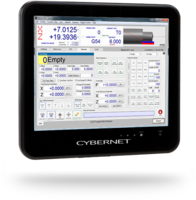
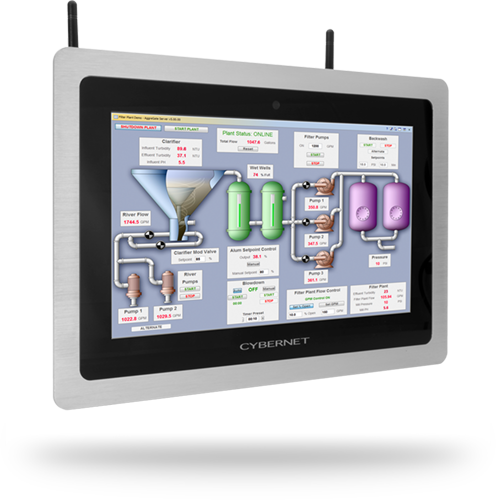
“Smart” manufacturing technologies such as automation, robotics, and cloud computing continue to be a major point of investment for businesses. As a recent Deloitte survey reveals, 92% of executives believe that smart manufacturing will be a main driver for competitiveness. These technologies, broadly grouped under the term “Industry 4.0,” are meant to make businesses more productive, give deeper insights into operations, identify weaknesses to address, and prevent information silos from forming between departments. Many of these technologies will require powerful and reliable industrial computers to fully flourish in manufacturing environments.
2. Supply Chain Flexibility and Reshoring
Tenuous global relationships and an uncertain tariff landscape have injected unwelcome uncertainty and increased costs for manufacturers, forcing them to respond in myriad ways. Manufacturing trends, such as overstocking imported goods ahead of the tariffs or reevaluating supply chain structures, have defined many businesses' efforts recently.
For many, the strongest solution is to rely on reshoring or near-shoring strategies, which bring manufacturing back to businesses within the same nation or its closest trading partners. While more expensive and time-consuming, reshoring manufacturing does protect against international market disruptions better than other options. At a minimum, manufacturers will need to further improve their supply chain flexibility and related skills, such as constantly re-evaluating their partnerships, identifying and managing risk, and modeling different scenarios and how they can react to them.
3. Further Adoption of AI Agents for Customer Experiences
Going forward, we will likely see more widespread implementation of AI agents, from basic chatbots to more advanced systems capable of handling multiple complex tasks. Chatbots are already widely deployed to handle basic customer-facing roles, such as technical support and top-of-funnel sales assistance. Agentic AI systems are now being explored for aftermarket services, which can give manufacturers two major advantages:
- Provides a subscription-based revenue stream beyond the initial purchase.
- Encourages customer loyalty to your products and services, leading to repeat business.
AI agents can be used to manage inventory and adjust maintenance schedules based on the information they receive, such as the number of purchase orders placed or the rate of wear on vital components, making them the perfect companion service for any heavy industrial product. Outside of consumer-facing roles, AI agents can help manufacturers adjust service-level agreements based on factors such as equipment usage and risk patterns, and help representatives approve or reject warranty submissions in accordance with those terms.
4. AI-Based Investment and Demand
Artificial intelligence remains the central issue and driving force in the economy, with an insatiable demand for raw materials, energy, and infrastructure to support its expansion. Even if your company does not work in AI, you may wind up competing with AI companies for construction materials, power, or semiconductors. Suppliers in these sectors can look forward to vastly increased demand, but competitors and adjacent consumers will struggle to have their needs met.
For example, RAM manufacturer Micron recently announced that it would be exiting the consumer RAM market to focus completely on larger strategic customers, i.e. AI chip manufacturers, leading to a spike in prices for consumer RAM cards. Similar price increases and market shifts have occurred in sectors such as concrete (for building data centers) and energy (to power said data centers). Manufacturers must remain aware of these shifts and how they can affect their own operations, such as when planning an expansion of their facilities or sharing a power grid with a data center.

5. Talent Retention and Development
Skilled labor remains a critical point of concern for executives as technological shifts require reskilling and large numbers of seniors exit the workforce. If the current manufacturing trend of reshoring continues, more companies will find themselves competing for the same workers. While automation and smart manufacturing can offset this need to some degree, businesses must invest further in hiring and developing employees internally, rather than simply hoping to hire someone with the perfect set of skills. This is especially critical as new fields of expertise, such as AI-related skills, digital tools, and other Industry 4.0 technologies, become more widespread.
Beyond training and compensation, manufacturers should also look at non-wage investments in their employees to help retain staff. As cost-of-living expenses continue to rise, support for childcare and housing, or allowing for work-from-home for certain roles, can be the difference between a well-staffed workforce and constant churn.
6. Data-Driven Decision-Making
Automated machines, sensors, and other forms of Industrial Internet of Things generate an enormous amount of data that manufacturers are learning how to use in order to better optimize their operations. Taking advantage of this technology requires two major changes from manufacturers:
- Technology capable of gathering and storing this information, such as rugged mini PCs collecting data from an assembly line.
- A cohesive strategy that can take advantage of these insights and apply them to the company’s operations.
Armed with this information, manufacturers can develop predictive maintenance routines, identify supply chain bottlenecks, and improve quality control. These initiatives can help drive a business’s growth in the coming years.
7. 3D Printing and Additive Manufacturing
3D printing and other forms of additive manufacturing have seen rapid improvements in quality, accuracy, and speed, making them increasingly viable for a range of roles. 3D printing is a natural fit for prototyping and concept development, allowing teams to test a wide range of product iterations without investing in handmade models. The unique mechanics of 3D printing also allow it to produce geometrically complex components in a single step, rather than relying on multiple operations or subcomponents to achieve the same result in traditional manufacturing.
Depending on the role and mechanical stresses, 3D-printed components can serve as replacement parts that are cheaper and can be printed in a single day, rather than waiting for parts to be shipped from a warehouse. Additive manufacturing can also produce components on demand, reducing the need to manage and store large inventories.
8. Cybersecurity As a Necessity, Not a Luxury
Sadly, as digital technologies and tools become more widespread in manufacturing, there are more opportunities for cybercriminals to attack. Industrial cybersecurity cannot be treated as a mere footnote; it is vital to a company’s operations and should be treated with the same importance as workplace safety. Every piece of digital technology, from a panel PC to an industrial tablet, needs to have cybersecurity measures such as RFID card-based access control and TPM-based encryption.
Beyond device-based security, manufacturers also need to train their employees to spot and protect themselves against common attack methods, such as phishing, and thoroughly audit their partners to ensure they are taking the appropriate measures as well.
Embrace New Manufacturing Trends with Cybernet Manufacturing
Navigating changing trends in manufacturing requires flexibility in both thinking and operations, knowing when and where to invest and when to hold off. When it’s time to invest in new technology to take advantage of these new trends, it’s critical that you work with a trustworthy and reliable partner to supply these tools.
If you need industrial computers and tablets to upgrade your manufacturing operations, contact Cybernet Manufacturing. Our range of manufacturing computers is designed and manufactured specifically for harsh work environments and boasts failure rates below 0.5%, letting them serve where you need them the most.