Rural hospitals are in a crisis, facing aging populations, higher expenses, and limited operational capability that often leaves them unable to treat the patients they receive. Faced with these challenges, many are turning to telehealth solutions on medical computers to keep delivering effective care.
Issues That Rural Hospitals Face
As of October 2026, nearly 700 rural hospitals across the United States are at risk of closure. Many have been forced to shut down specialty care services such as oncology or OBGYN, leaving patients who need such services without critical treatment. The greatest challenges that rural hospitals currently face include:
Financial Constraints
Rural hospitals are squeezed from multiple directions when it comes to balancing their budget. Because they serve smaller populations and fewer patients, there is less demand for their services. The demand does exist, but it cannot generate enough revenue to cover fixed overhead costs such as 24/7 operational capability and providing emergency services.
The second major squeeze is that people in rural areas are more likely to use public insurance options like Medicare and Medicaid, which usually pay less for services than private options do. This means that rural hospitals don’t just treat fewer patients than those in more populated areas; they also make less per patient when they do.
Long Distances
Rural hospitals must cover a much broader footprint than their urban or suburban counterparts. On average, rural Americans live 10.5 miles from their nearest hospital, compared to 5.6 miles for suburban residents and 4.4 miles for those in urban areas.
This creates issues for both patients and hospitals.
- It means that if a patient wants to receive treatment, they must travel 20+ miles to and from the hospital to receive it, a serious investment in time they might not be able to spare. Thus, they may choose to delay or skip treatment and cause their health conditions to worsen.
- For hospitals, it adds expenses to any ambulance services they operate as they spend more on fuel and maintenance. It also delays emergency responses, especially within the “golden hour” for dealing with traumatic injuries.
Limited Access to Specialists
Rural hospitals often lack the resources to support specialized departments like neurology or psychiatry. When trying to balance your budget, it can be difficult to justify employing a provider who may only treat a few patients at any given time. By that same logic, specialists are more likely to work where demand is higher, and they can be better compensated.
This means that when patients do need specialized care, they must travel even further to receive it, which brings us back to the prior issues.
Limited Infrastructure
Because of limited funding, rural hospitals often focus on day-to-day operations and cannot invest in expansion, renovation, or new technology. Over time, this leaves rural hospitals less able to treat patients effectively as they get left behind by the march of progress, creating a death spiral: patients cannot receive treatment, so they go elsewhere, so the hospital doesn’t get reimbursed, so they can’t invest in new technology, so patients can’t receive treatment… on and on it goes until the hospital sadly shuts down.
How Telehealth Answers These Issues
Modern telehealth solutions involve connecting providers and patients via digital tools like Teladoc, Doctor on Demand, and WeHealth. Rural hospitals can use this technology in two different ways:
- Connecting with patients who are still at home to consult them about their condition (does this look infected, is my arm broken or just bruised, etc)
- Connecting patients and providers at the hospital with specialists for more in-depth consultations, second opinions, and expert treatment without needing to transfer the patient to another facility
Easier Access to Treatment, Better Outcomes
The most obvious benefit of telehealth is that it makes it easier for providers and patients to connect. Instead of driving to the hospital or sending an ambulance, patients can connect remotely with their provider for advice or a basic examination.
Removing barriers between the two groups this way makes it far easier for patients to receive treatment and encourages them to do so in the first place. It’s one thing to drive to the hospital or request an ambulance; it requires far less commitment to make a phone call. The near-ubiquity of smartphones with built-in cameras also means providers can reach patients through the tools they’re already comfortable with.
Less Demand on Hospital Infrastructure And Workforce
Telehealth helps reduce the stress on the hospital to process and treat patients and the need for specialists on the premises. If a patient comes in with a niche condition, the hospital staff can set up a telehealth appointment with an expert who can be hundreds of miles away, but still able to diagnose and recommend treatment.
These experts can be paid per appointment or on a contract basis rather than as a full-time employee, reducing payroll costs.
Less Demand for Travel
Telehealth appointments reduce the need for travel for all parties involved in the treatment process. Patients no longer need to drive to the hospital, and the hospital needs fewer ambulance dispatches. It also means that if patients need to see a specialist, they can travel to the hospital for that appointment rather than the greater distance to see that specialist in person.
Easier Access to Critical Information for Providers
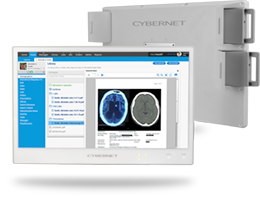
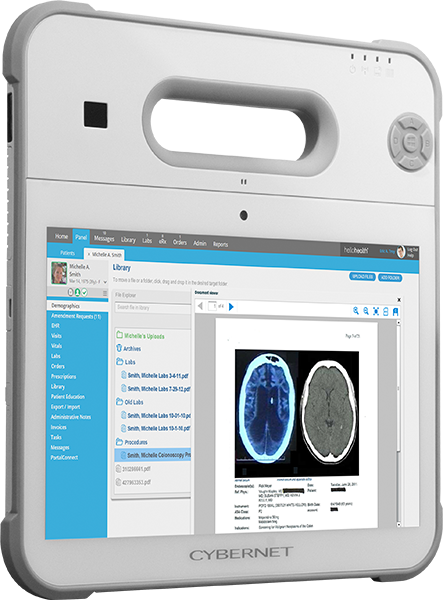
Medical computers used for telehealth also serve as communication devices and provide access to critical digital tools like electronic health records and medication details. This means that providers can instantly access critical info when speaking to their patients, rather than fumbling for paper records.
If you’d like to see how Cybernet’s medical computers can serve in telehealth roles, we offer a risk-free evaluation program that lets you deploy our models in real-world conditions.
What Do Rural Hospitals Need From Telehealth Devices?
While telehealth is incredibly useful for healthcare providers, not just rural services, any device used for such a purpose needs to be specifically designed for such a role. While it may be tempting to use consumer-grade solutions to save on budget, such devices have critical flaws that make them unacceptable for use in healthcare.
Built-in Cameras
Most consumer-grade PCs and monitors do not feature an integrated webcam, and instead rely on a peripheral accessory that attaches atop the monitor or sits on the user’s desk. These solutions are fine in a typical office, but introduce quality-of-life and reliability issues in a healthcare setting.
First, peripherals like webcams must connect to the PC to transmit information and receive power. This isn’t much of an issue in a static office environment, but in healthcare, where doctors frequently move from place to place and take the PC with them via a cart, it creates a snagging and tangling hazard.
Second, webcams in healthcare environments must be cleaned and disinfected like any other piece of equipment, a process they are not designed for. Harsh cleaning chemicals can easily seep through the casing and damage the camera's internal electronics, rendering it useless. Medical tablets and PCs have webcams built into the chassis and protected by an IP65-rated casing, eliminating both issues.
Reliable Internet Access
Obviously, any communications over the Internet must be supported by hardware that maintains a stable connection. For rural hospitals that might not have the strongest Internet service, this means devices need to have both wired and wireless connectivity options.
The current standard is WiFi 7 for wireless connections on both PCs and tablets, allowing providers to use their devices wherever they are needed throughout the hospital without losing the link to their patients or other providers.
Secure Connections and Data Storage
All communications between providers and patients, including telehealth, are considered private health information and therefore protected by HIPAA. Thus, any device that supports, records, and stores such conversations must be secured against any intrusion or hacking attempt.
Medical-grade devices ensure this protection by adopting Imprivata encryption and TPM 2.0 security measures as a default feature on every model, and committing to an unchanging bill of materials that makes them easier to patch and update. Consumer-grade PCs are not built or supported to this degree and can therefore have unacceptable flaws in their security footing.
Telehealth Solutions from Cybernet Manufacturing
Rural hospitals must embrace new solutions to continue treating their patients without breaking their budget at the same time. For many cases, telehealth appointments can help lower operating expenses without compromising on quality of care or placing a greater burden on providers and patients.
Cybernet’s medical computers and tablets support telehealth workflows with:
- Integrated webcams
- WiFi Internet connectivity for easier use
- Full suite of cybersecurity features to protect private health information
And more. If your rural hospital is looking to integrate telehealth workflows into its day-to-day operations, contact the experts at Cybernet Manufacturing. With decades of experience in designing and manufacturing computers for high-demand workspaces, our products boast a 0.5% failure rate year-over-year, ensuring reliability.