Medical Box PCs
High-Performance Medical Computing with Zero Footprint
The ultimate "Headless" solution for anesthesia machines, surgical booms, and integrated medical devices. 100% Fanless. 100% Sterile.
The ultimate "Headless" solution for anesthesia machines, surgical booms, and integrated medical devices. 100% Fanless. 100% Sterile.
Sometimes the best computer is the one you never see.
Embedding a PC into a ventilator, C-Arm, or diagnostic cart? The CyberMed R60 fits inside tight enclosures, providing full desktop processing power without the airflow requirements or noise of standard computers.
Turn any standard medical monitor into a powerful all-in-one workstation. Mount the R60 behind the screen using standard VESA brackets to drive high-resolution surgical dashboards without replacing the entire display unit.
Don't scrap your older non-powered carts. The compact CyberMed R60 can be mounted under a shelf or inside a bin, instantly upgrading your mobile fleet to Windows 11 and EMR compatibility without the bulk of a tower.
Modern medicine still runs on legacy connections. We didn't forget that.
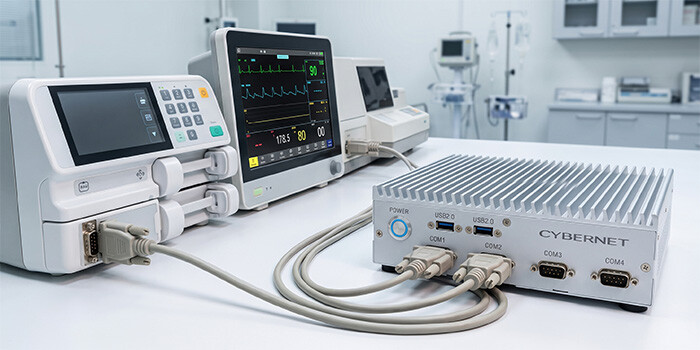
Stop relying on flaky USB-to-Serial dongles. The CyberMed R60 features native RS232/422/485 ports to connect directly to anesthesia machines, patient monitors, and legacy peripherals with zero latency.
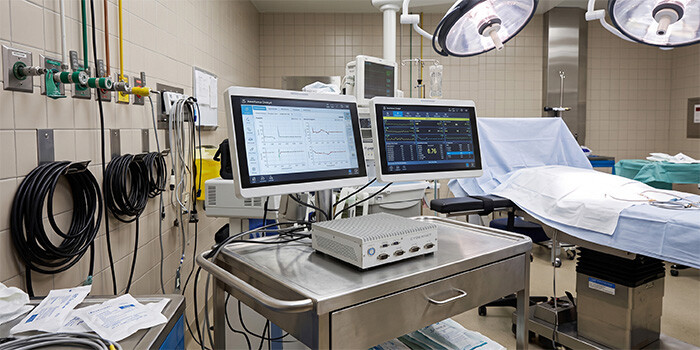
Drive complex imaging setups with ease. With both HDMI and DisplayPort outputs, the CyberMed R60 can power two independent 4K monitors simultaneously, making it ideal for PACS viewing stations and digital signage.
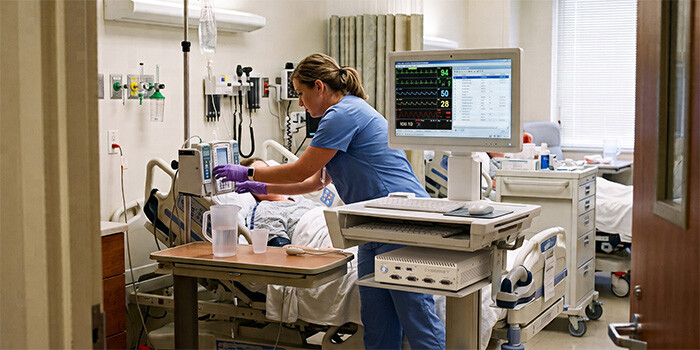
Safety is non-negotiable. The CyberMed R60 comes with a medical-grade power supply that meets strict low-leakage current standards, ensuring it is safe to use within the patient proximity.
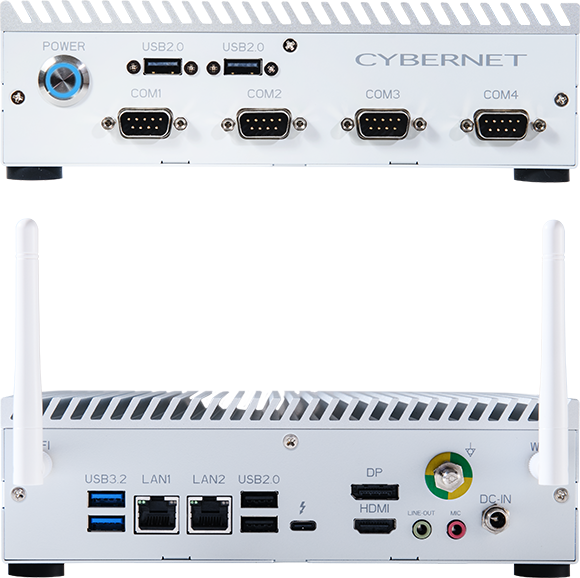
Desktop Class Performance
Run LIMS & PACS locally
Lightning fast boot times
Enterprise & IoT editions
Minimal footprint
It's tempting to opt for consumer-grade NUCs. Here is why that is a mistake for hospitals.
| Feature | Cybernet CyberMed R60 | Intel NUC / Consumer Mini PC |
|---|---|---|
| Safety Certification |
IEC 60601-1 (Patient Safe)
|
UL 60950 / UL 62368 (Office Use Only)
|
| Cooling System |
Fanless (Sealed / Sterile)
|
Active Fan (Spreads Dust/Germs)
|
| Product Lifecycle |
5-7 Years (Long-term Stability)
|
12-18 Months (End of Life)
|
| Legacy Ports |
Native RS232 (No Adapters)
|
None (Requires Dongles)
|
| Mounting |
VESA / DIN Rail / Wall
|
VESA Only
|
We don't just sell computers; we build your hardware platform.
As a true OEM, Cybernet can customize the CyberMed R60 to fit your specific device requirements. From custom BIOS and branded chassis colors to specialized I/O boards, we help you get your FDA-approved device to market faster.
Yes. Because the CyberMed R60 is 100% fanless and uses a specialized heat-sink chassis design, it does not require active airflow. It is safe to mount inside cabinets, wall voids, or medical device housings.
Yes. We can pre-image the device with Windows 10 or 11 IoT Enterprise, allowing you to lock down the operating system for specific clinical applications (kiosk mode).
The CyberMed R60 is compatible with standard VESA mounting brackets. You can mount it directly to the back of a VESA-compatible monitor, or "sandwich" it between the monitor and a wall arm.
Like our All-in-One line, the CyberMed R60 maintains a failure rate of less than 0.5% annually, thanks to its industrial-grade components and lack of moving parts (no fans or spinning drives).
Absolutely. These units are engineered for 24/7 continuous operation. By utilizing industrial-grade components and a fanless thermal management system, the hardware avoids the common points of failure—like broken fans or dust buildup—that typically cause consumer PCs to overheat or crash during constant use.
Unlike standard plastic or metal housings, antimicrobial enclosures are infused with an agent that inhibits the growth of microorganisms such as bacteria, mold, and fungi. This provides an extra layer of protection for the device itself, especially in high-touch environments like nursing stations or shared mobile carts where cross-contamination is a risk.
The unit supports several mounting configurations, including standard VESA mounts for monitors, wall-mount brackets for hallway installations, and specialized "din rail" or "pole mounts" for integration into complex medical machinery or laboratory environments.
Cybernet PCs can be customized or configured with specialized internal components to support specific power needs. For standard installations, it utilizes a medical-grade AC/DC power brick to ensure low-leakage current and patient safety. Please contact our engineers for specific PoE or DC-input requirements.
Yes. Our medical box PCs are built with high-performance Intel Core processors and high-speed NVMe SSDs to meet or exceed the hardware requirements for all major Electronic Medical Record (EMR) and Electronic Health Record (EHR) platforms. They are fully compatible with Windows 10 and Windows 11 Pro/IoT.
The 4th Edition of IEC 60601-1 specifically addresses Electromagnetic Compatibility (EMC). Medical box PCs certified to this standard are tested to ensure they do not interfere with other sensitive bedside equipment, such as ventilators or anesthesia machines, and are resilient against interference from external sources like cell phones or Wi-Fi routers.
Yes. Unlike modern consumer PCs that have phased out older connectivity, our medical SFF PCs include native RS232/COM ports and multiple USB 3.0/3.1 ports. This allows hospitals to continue using specialized legacy equipment, such as barcode scanners, vitals monitors, and lab equipment, without the need for unreliable adapters.
Consumer-grade PCs often change components every 12 to 18 months, which forces IT departments to constantly re-image and re-validate their software. Cybernet provides a 5-to-7-year product lifecycle. This means hospitals can standardize on a single hardware configuration for years, significantly reducing the "total cost of ownership" and simplifying IT maintenance.