Manufacturing, civil infrastructure, and other critical businesses and services rely on operational technology (OT) to manage their physical equipment and work processes. Because these systems support interconnected workflows and critical operations, an attack can have disastrous consequences for operators and the broader public.
Protecting OT devices and systems is a critical priority for businesses and infrastructure managers, but often goes neglected due to aging systems, lack of support, and low visibility over processes and inventory. Correcting this issue requires reforms in security processes and support from rugged industrial computers capable of protecting the OT network.
The Difference between IT and OT Cybersecurity
One issue OT security faces is being confused with, or mistaken for, information technology (IT) security. While the two fields overlap in several areas and have similar priorities, the differences between them warrant explanation.
Information Technology (IT) Security
IT security focuses on protecting data and controlling who can access it. This includes protecting against ransomware, phishing, and DDoS attacks that aim to sabotage or destroy data, using measures like user authentication, access control, and data encryption.
IT cybersecurity often protects common consumer devices like desktop PCs, laptops, smartphones, and printers. These measures, such as firewalls and antivirus software, receive frequent updates to keep pace with evolving malware, and must cover a much wider attack surface.
Operational Technology (OT) Security
OT security prioritizes protecting physical devices, processes, and the people who use them. OT cybersecurity focuses on defending industrial control systems (ICS) and supervisory control and data acquisition (SCADA) systems, which collect and analyze information from equipment in real time.
OT cybersecurity must protect heavy machinery, PLCs, and communications across these various devices. Because these systems rarely have downtime, patches and updates are much less frequent in OT security. Because these systems are “air-gapped” from broader networks, they have a smaller attack surface, but have much harsher consequences if they are compromised.
To summarize:
| IT Cybersecurity | OT Cybersecurity | |
|---|---|---|
| What it protects | Data and information systems | Physical processes, equipment, facilities, and people |
| Top priority | Confidentiality and data availability | Safety and keeping operations running |
| Patching | Frequent, often automated updates | Rare, because downtime is costly and systems are often legacy |
| Attack frequency | Higher | Lower |
| Consequences of a breach | Data loss, financial and reputational damage | Physical damage, environmental harm, injury, or loss of life |
Unique Challenges for OT Cybersecurity
Compared to IT security, OT cybersecurity faces unique challenges that require special attention.
Older Legacy Equipment
The first and most pressing issue that many OT cybersecurity efforts face is the age of the equipment involved. Most IT hardware has a product lifecycle of 3-5 years. OT hardware, by contrast, is often used for decades, leaving it incompatible with modern cybersecurity programs.
This makes ICS environments extremely vulnerable to intrusion and sabotage if attackers bypass air-gapping and initial network defenses.
Passive Systems
Many industrial processes run on passive systems. In other words, these are systems that do not update or alter their operations unless an outside force or new instructions tell them to. For example, if a machine that makes bottle caps is turned on, it will keep making bottle caps until it is turned off. It will keep running its processes even if no raw materials are fed into it and no machinery can accept its output.
This means that these machines cannot automatically trigger a shutdown during anomalous activity, which means crisis situations go unaddressed for longer and can cause more damage.
Lack of Visibility
The age and history of OT assets also make them difficult to track and monitor. A technician might have changed components or software years ago and failed to record this change, creating a security loophole no one knows about until a crisis occurs.
Inventory management is another serious weakness. Many businesses and organizations lack an up-to-date inventory of all of their assets, making it far more difficult to conduct accurate risk assessments and roll out security updates.
Skill Gaps
Most cybersecurity training and education focuses on IT concerns and skill sets. This isn’t surprising, since most cybercrime threats target IT, but it leaves a considerable blind spot when those teams try to address OT concerns.
At the same time, manufacturing and infrastructure teams are often unaware of the threats cybercriminals pose to their operations and might not treat security issues as seriously as they should. Both of these skill gaps make OT cybersecurity more difficult than it should be.
Overlap With IT
While IT and OT security are technically separate fields, they do intersect, especially as Industry 4.0 technologies like digital twins and Industrial Internet of Things become more common. While this can dramatically improve a company’s workflows, it also means IT cyberthreats can become OT threats, and vice versa.
For example, a malicious program that breaches a company’s CRM can spread to their machinery and shut them down if those portions of the network are not properly segmented off from each other.
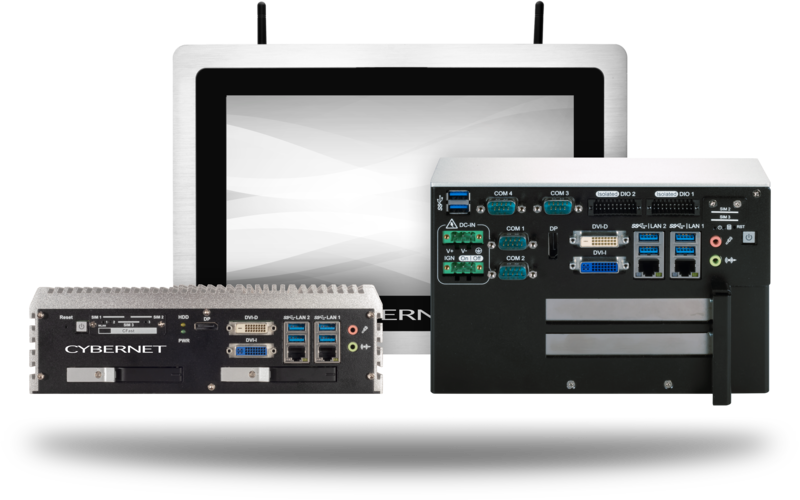
Rugged industrial PCs are designed not only to support more advanced workflows, but also to address these cybersecurity issues. If you’d like to see how, Cybernet offers a risk-free evaluation program that allows you to test our products for yourself.

Principles of OT Cybersecurity
For companies that wish to improve their OT cybersecurity, the following six principles should be considered top priorities:
- Safety Is Paramount: OT security efforts must prioritize safety above all. If machinery or critical infrastructure is compromised, it can translate to more than just lost data and stolen financial records, but electrical discharges, chemical hazards, and fires in the real world as machinery breaks down unexpectedly. Thus, all future plans must focus on preventing these scenarios.
- Knowledge of the Business is Crucial: To have an effective OT security plan, teams must know what they’re protecting, where it is located, and how it interacts with the rest of the facility. System blueprints, asset lists, network diagrams, employee rolls, and more must be available to develop a comprehensive security plan.
- OT Data Must Be Protected: Because OT systems change so infrequently, knowing how the system works is extremely valuable to malicious actors. Thus, this information must be stored securely (such as on computers with built-in encryption and access control features) and only shared with trusted partners who have demonstrated their own security competency.
- Segment and Segregate OT From the Network: Network segmentation has been a common recommendation for protecting vital infrastructure and machinery for decades, and remains one of the best practices to this day. Separating OT networks from the broader Internet and IT networks reduces the chances of cross-contamination.
- Secure Your Supply Chain: Manufacturers and infrastructure operators must review and audit their suppliers for equipment and software to ensure they are fulfilling their cybersecurity obligations as well. This means making sure they control their bill of materials, monitor for new security flaws, and issue security patches in a timely manner.
- Support Your Workers: If and when a cyberattack occurs on OT networks, trained and well-equipped workers are the only thing that can stop it. System engineers, field operations staff, and cybersecurity specialists are all needed to design an effective response plan and implement it when the time comes, so speak to them and make sure their requests for tools and education are met.
Protect Your Technology With Secure Computers From Cybernet
Ongoing modernization efforts in manufacturing and infrastructure mean that the attack surface for operational technology will continue to expand. This is not just a question of stolen financial records and employee data, but a genuine threat to the health and safety of workers and communities.
Thus, operators must embrace computer solutions and workflows that enhance their security footing, not compromise it. Cybernet’s rugged industrial computers are designed specifically for this role, with features like:
- TPM 2.0 encryption to protect confidential information and prevent tampering
- Access control methods like RFID scanners and barcode readers
- Minimum 5-year-long lifecycle on all of our devices to reduce replacement costs and training, and better match OT lifecycles
- Full control over our bill of materials to prevent security gaps
All of this comes without compromising on their reliability or ruggedness, which is why our computers enjoy a 0.5% failure rate year-over-year, ensuring support when you need it most. If you’re looking to upgrade, contact our team today.