Only 0.3% of Earth’s water is drinkable and easily accessible. The rest is locked up in glaciers, trapped deep underground, or so salty and brackish that it’s unfit for consumption. 0.3%, for all of human society.
Desalination plants target the last of those three issues, removing salt and other particles from water to make it drinkable. But desalination plants are resource-intensive and expensive to run, and impose heavy demands on their equipment. Rugged industrial computers can handle these intense workloads and modernize plant operations to produce more water at a lower cost.
Primary Desalination Processes
Desalination occurs at various scales, from smaller devices that serve a single house or boat to massive industrial systems that supply water to entire communities. Regardless of scale, the technology and processes remain largely the same: thermal distillation or reverse osmosis. Alternatives to these two exist, but they are far less common.
Thermal Desalination
Thermal desalination (also called thermal distillation) relies on evaporation to separate water from salts and other particles found in seawater. As water evaporates from liquid into a vapor, these solid particles get left behind, leaving only freshwater when it condenses back into a liquid.
Modern thermal distillation relies on multi-stage flash technology, which moves water through chambers with progressively lower pressure, causing more and more water to evaporate.
Thermal desalination is the historical solution, but increasingly less popular due to the high energy costs associated with heating large amounts of water. However, it is still used in some areas of the world with high amounts of waste heat, such as industrial zones. It is also a common solution in the Middle East because of cheap access to fossil fuels and the naturally hot climate.
Reverse Osmosis Desalination
Reverse osmosis desalination involves passing saltwater through a semipermeable membrane that lets water pass through but traps solid particles, such as salt. High-pressure pumps push saltwater through increasingly fine membranes, filtering out contaminants until only freshwater remains.
While it requires less power than thermal desalination, reverse osmosis pumps still draw significant power and are expensive to operate. They also generate large amounts of brine (extremely salty water) that must be disposed of afterward and remove genuinely useful minerals from water that must be re-added before people can drink it.
Both solutions require extensive automation and computer support when implemented at an industrial scale. If you’d like to test Cybernet’s computers in a real-world work environment, we offer a premier demo program to let you test them in a limited scope without committing to a full purchase.
What Challenges Do Computers Face in Desalination?
On top of all the challenges desalination faces as an industrial process, computers used in desalination plants must withstand extreme physical stresses and meet high performance requirements. The most important challenges industrial PCs must address (and Cybernet’s solutions) include…
Heavy Vibrations
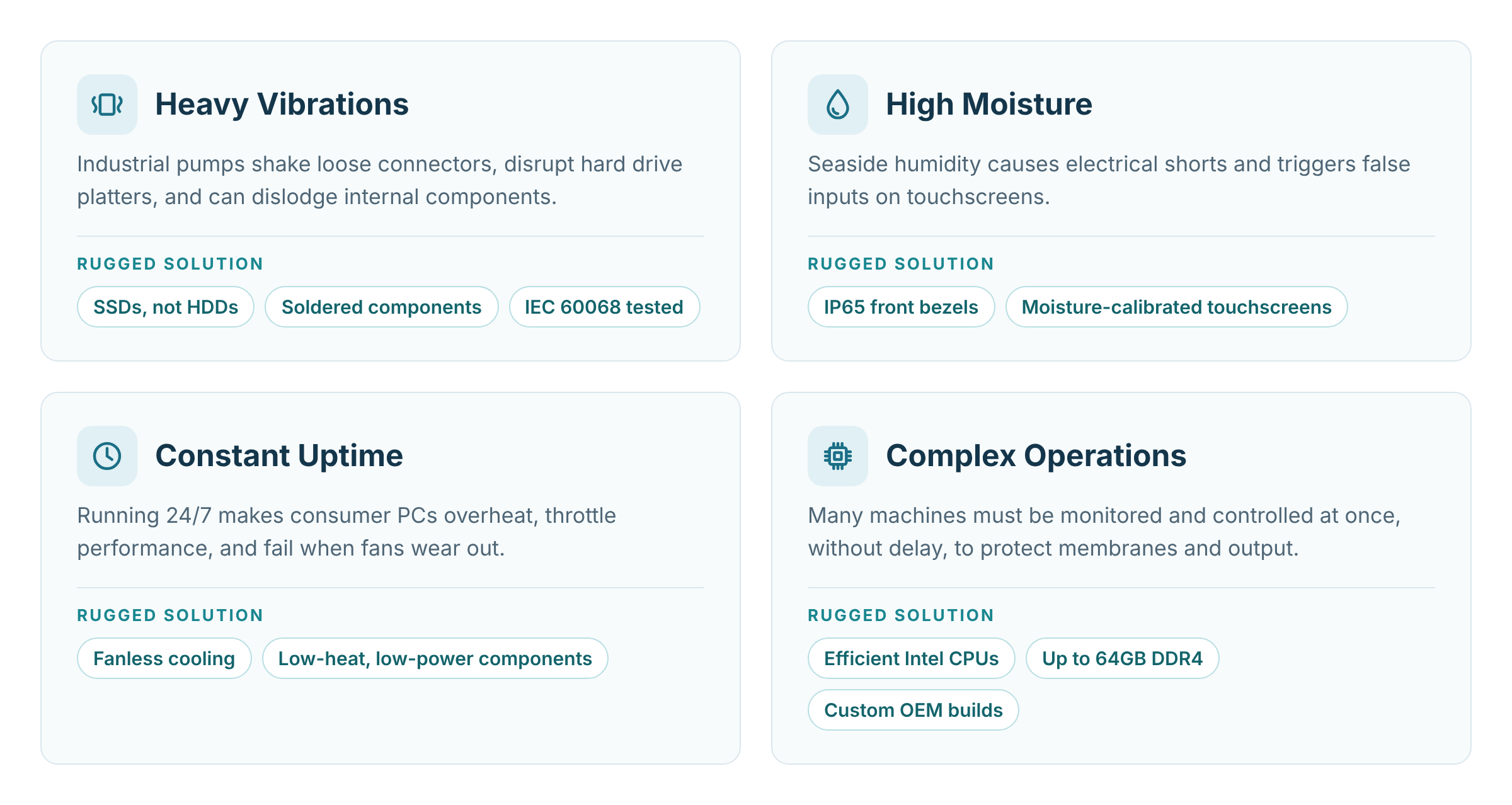
Industrial-grade pumps generate extremely harsh vibrations as they push thousands, even millions, of gallons of water through the plant. These vibrations are incredibly harsh on computer equipment, loosening connectors, disrupting hard disk drive (HDD) platters, and even dislodging components inside the computer itself.
Solution: Truly rugged industrial computers designed for near-machine operation will have vibration-resistant design features, such as using solid-state drives (SSDs) rather than HDDs, which have no moving parts and are less prone to failure. They will also solder components directly onto the motherboard and test their computers to IEC 60068 standards for shock and vibration resistance.
High-Moisture Environment
Obviously, desalination plants operate in high-moisture environments because of their proximity to the ocean. This moisture can wreak havoc on electronics, causing shorts that damage the computer and interfere with touchscreen controls.
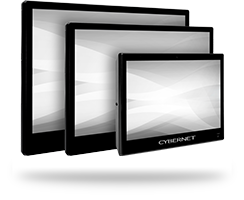
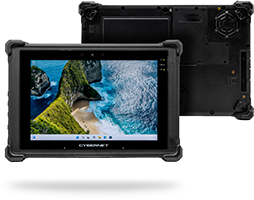
Solution: Cybernet’s industrial computers feature ingress protection measures that seal their internal components away from moisture. Our panel PCs and tablets, for example, have IP65-rated front bezels that protect them from both dust and liquids from entering the casing.
These PCs and tablets also have their capacitive touchscreens carefully calibrated to distinguish genuine inputs from false positives caused by moisture on the screen.
Constant Uptime
Businesses and consumers need fresh water 24/7 without interruption; thus, desalination plants must run 24/7. This places a heavy burden on both desalination machines and the computers that support them, accelerating wear and tear on critical components.
Consumer-grade PCs running without pause can overheat, lose performance due to thermal throttling, and fail when fans wear down and break.
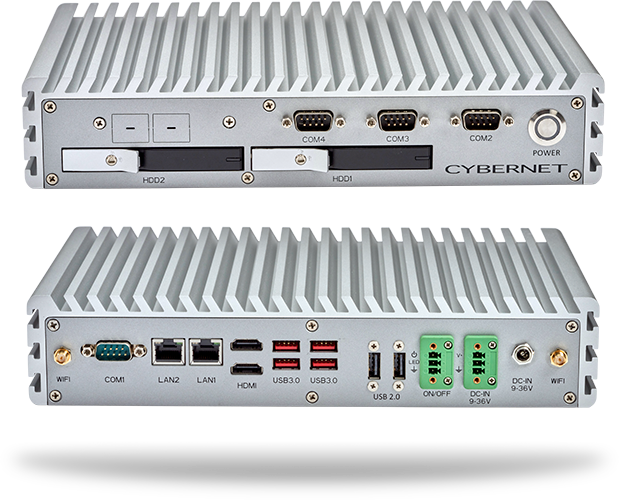
Solution: Industrial PCs address this challenge by using components that use less energy and generate less heat than other options, reducing the need for cooling. They then supplement this with fanless cooling, which has zero moving parts and is far more reliable. This is why all of Cybernet’s panel PCs and mini PCs use fanless cooling solutions.
Complex Operations
Computers that run desalination operations must monitor and control multiple machines simultaneously without failure. If water is pumped too fast through a reverse osmosis membrane, it can damage the membrane. If water flows too slowly through a thermal distillation plant, it disrupts the heating process and leads to less freshwater being created.
Tracking sensor data from multiple points in the desalination process and issuing commands without delay requires serious processing power and enough memory to support multiple tasks at once.
Solution: Cybernet industrial PCs are built with efficient Intel CPUs and up to 64GB of DDR4 RAM, providing more than sufficient processing power and memory for industrial-grade tasks. As an OEM, we can customize our products to better fit your performance needs and budget, saving you from overspending on power you don’t need.
Benefits of Using Industrial Computers in Desalination Plants
By implementing rugged industrial computers throughout their facility, desalination plant operators can enjoy multiple upsides, with the most important being:
Optimized Operations
With real-time tracking and control over their processes, plant managers can get more out of their desalination operations. Operators can adjust based on changing seawater conditions such as temperature, mineral and biological content, automate pumps to optimize energy usage, and run digital twins to simulate potential scenarios.
All of these improvements lead to the same outcome: more drinkable water produced at a lower operating cost for the plant.
Predictive Maintenance
Unplanned downtime is one of the biggest expenses for any industrial operation; when that operation provides a resource as vital as water, any interruption is unacceptable.
By using industrial computers to track sensor data throughout the desalination plant, plant managers can monitor for early warning signs of failure, such as abnormal vibrations, sudden changes in temperature, changes in water pressure throughout the desalination process, etc. By identifying these issues before they spiral into a serious breakdown, plant managers can significantly reduce the cost of repairs and the downtime needed to make them.
The information provided by industrial-grade computers also lets plant operators plan ahead for their maintenance plans. Rather than react to breakdowns as they occur, technicians can schedule replacements in advance, reducing overall operating costs.
Enables Long-Term Analytics
Desalination plant managers can use the data gathered by industrial computers and their attached sensors to review operations over the span of weeks, months, and years, and plan future long-term goals.
For example, operators can analyze factors like:
- how demand changes on an hour-by-hour, day-by-day, or seasonal basis, helping them scale output appropriately and avoid under- or overproducing fresh water.
- track machine data to determine which components break down the most frequently, to see if there are any parts of the desalination process that need replacing.
- monitor energy consumption during the desalination process to identify points of waste and potential improvement
Desalination Plant-Ready Computers From Cybernet Manufacturing
As human populations expand and the demand for water rises, desalination will become increasingly critical, especially in areas that are already water-starved. To reduce the cost and energy consumption of this vital process, plant managers will need to rely more and more on automation and deep analytics enabled by industrial computers that can withstand the harsh work environment.
If you need rugged, reliable computer solutions that can handle
- Close proximity to running machinery
- High-moisture work environments
- The need for 24/7 operational support
Then contact the team of experts at Cybernet Manufacturing. With three decades of experience designing, manufacturing, and testing industrial-grade computer solutions, we can pair you with the ideal product for your needs, backed by a proven failure rate below 0.5%.