The complexities of modern economies and international relationships mean that manufacturers must navigate a tangled web of agreements, treaties, and tariffs to sell their goods in multiple countries.
One of the most critical of these agreements for selling products in the United States is the Trade Agreement Act (TAA). Maintaining TAA compliance is necessary for any manufacturer hoping to sell complex goods like industrial or medical computers. If your product relies on an embedded computer, that computer must be TAA-compliant for your product to be as well.
What is the Trade Agreement Act?
Originally passed in 1979, the Trade Agreement Act is a piece of legislation that governs trade relationships between the United States and other countries. The TAA applies to all contracts managed by the General Services Administration (GSA), the agency that manages basic supplies, communications, and workspaces for U.S. government offices and other agencies.
The purpose of the TAA is to encourage fair trade practices between nations and support American workers by encouraging the use of products made in the U.S. or in designated, TAA-compliant nations. Unless otherwise stated, the TAA applies to all contracts managed by the GSA and limits what the GSA can purchase to products manufactured in the United States and approved countries.
What Does It Mean To Be TAA Compliant?
For a product to be TAA compliant, it must meet the following requirements:
- Its manufacturer must be based in the US or a designated country. The GSA will only accept products and services from companies based in the US or a nation with a free trade agreement with the US, such as those in the European Union, Canada, Mexico, and Caribbean Basin nations.
- It must use products and services from designated countries. This means that the majority of a product’s components or value-adding processes must be performed in the US or the aforementioned trade partners. For example, if a medical device features an integrated medical computer, that computer must also be TAA-compliant to keep the overall device compliant.
- It must comply with domestic sourcing requirements. For government use specifically, products must also meet Buy American Act requirements, which mandate that a certain percentage of a product’s components be sourced domestically.
- The manufacturer must maintain up-to-date records. TAA compliance also requires proper record-keeping of all products and services a company sells to the US government and keeping them readily available for government auditing and inspections.

Why Does TAA Compliance Matter?
TAA compliance is critical not only for manufacturers seeking to do business with the US government, but also for manufacturers seeking to do business with other companies that do business with the US government.
Key reasons to maintain TAA compliance are:
Eligibility for Government Contracts
Any company that wants to sell its products and services to the US government must meet the TAA’s requirements for domestic sourcing and record-keeping. Given how large a customer the federal government is and how lucrative its contracts can be, companies can miss out on a massive revenue source if they don't maintain compliance.
Access to Global Markets
TAA compliance is also a key component of accessing global markets through the General Agreement on Tariffs and Trade and the World Trade Organization. This means that by meeting the TAA’s requirements, a company can sell to other countries that have free trade agreements with the US, massively expanding its business opportunities.
Meeting Private Customer Requirements
Beyond the US government, many private-sector companies also require their suppliers to be TAA-compliant. This may be because they wish to do business with the federal government, or simply because they want to rely exclusively on other companies in the US.
Better Supply Chain Management
Maintaining TAA compliance requires a company to closely monitor its supply chain and ensure that all of its products and components are sourced correctly. This can help a company optimize its supply chain, making it more reliable and transparent and reducing the chance of receiving defective or insufficient materials.
Maintain Your TAA Compliance With Cybernet Manufacturing
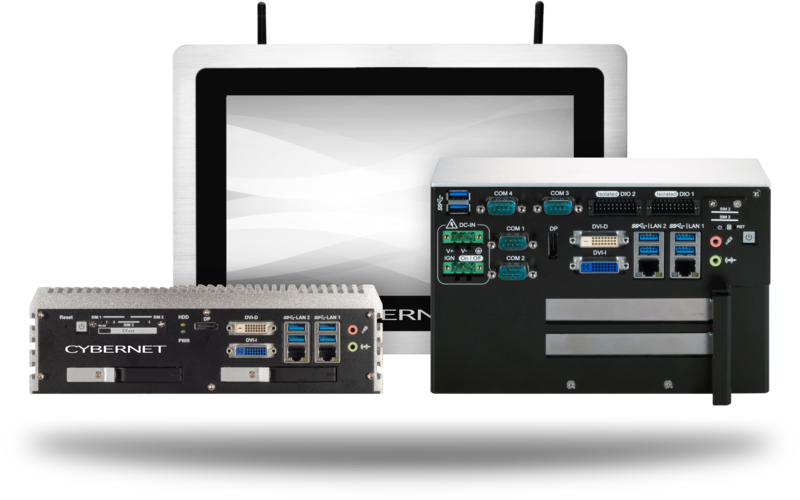
Adhering to the Trade Agreement Act is a critical consideration for any manufacturer that hopes to do business with the US federal government and its allies. That’s why Cybernet Manufacturing makes it one of our top priorities to uphold TAA compliance in all of our medical and industrial computers, not just for our sake, but for our customers as well.
Our strict compliance and US-based manufacturing mean that you can comfortably integrate our products into your own offerings, whether that means a larger piece of machinery or a medical device, without violating your own compliance. Our status as an OEM and control over our manufacturing process also allows us to customize our products to better fit your precise needs.
Need a partner that can support TAA compliance needs and deliver custom, high-quality computer solutions? Contact the team of experts at Cybernet Manufacturing. We’ve spent decades mastering our own supply chain and controlling our production process, and we can use that expertise to support your own efforts as well.