Without electricity, even the most advanced computer is nothing but a brick made out of silicon, circuits, and glass. In an industry obsessed with CPU clock speeds and GPU performance, power supplies perform the vital but often unnoticed task of keeping the flow of electricity stable.
Uninterruptible power supplies take this role a step further by storing power in the computer itself and keeping it running during critical moments. This makes them a critical component for any device used in high-stakes work, such as industrial and medical-grade computers, where even a second’s interruption can have dire consequences.
What is an Uninterruptible Power Supply?
A power supply is precisely what the name implies: it is the component of the computer that supplies power to the rest of the device by converting AC electricity into regulated DC power. This is a critical task, as AC fluctuates too much and can damage the delicate components inside a computer.
An uninterruptible power supply (UPS) is all of that, plus one more critical role: it provides power to the PC even when the original source (such as a wall outlet) is no longer functional. While a UPS cannot supply power forever, it is usually enough to save work and shut the PC down safely or keep it running until backup power sources come online.
Why High-Stakes Environments Require Integrated UPSs
While not a standard fixture in consumer-grade PCs, UPSs are often featured in computers used in high-stakes environments, where even a single second’s worth of interruption can have serious repercussions for other equipment or people.
Medical Computers
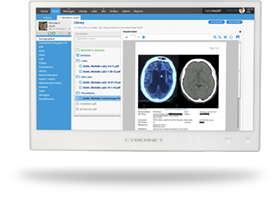
Healthcare IT hardware demands 100% operational uptime. Medical touchscreen PCs are regularly used in roles like telehealth, monitoring vital signs, charting, EHR access, and support during operations.
- Bridging the Emergency Generator Gap: Hospitals are always equipped with diesel-fueled backup generators to provide power even in the event of a grid failure. However, these generators take 10 to 20 seconds to spin up and provide power, which is still enough time to lose data or suffer the consequences of losing access to critical tools. An integrated UPS bridges this electrical gap and keeps mission-critical equipment running.
- IEC/EN 60601-1 Compliance: Certified medical-grade computers must adhere to rigorous IEC 60601-1 standards for electrical safety and electromagnetic compatibility. Medical-grade UPS systems ensure low touch/leakage current, protecting both patients and operators near the device.
- Data Integrity: A sudden loss of power during EHR updates, anesthesia monitoring, or live PACS imaging can corrupt databases and cause the loss of critical patient information. Integrated UPSs provide up to several hours of continuous runtime during critical moments.
Industrial Computers
Industrial computers are another major user of uninterruptible power supplies to maintain production logs, mitigate unplanned stoppages, and maintain worker safety.
- Machinery & Line Protection: A sudden power loss for a computer controlling heavy machinery can lead to mid-cycle failures, damaging both products and tools.
- Workplace Safety: Industrial PCs often manage critical safety tools like environmental telemetry, optical scanners, and worker location tracking. A UPS keeps these monitoring systems online even during a chaotic blackout.
Benefits of Using a UPS
Uninterruptible power supplies are a key measure for maintaining continuity of work and preserving functionality even in the event of a power outage. By using computers that integrate this feature, users gain key advantages like:
Key Advantages of UPS-Equipped Computing Infrastructure
|
Key Advantage |
Clinical Impact |
Industrial Impact |
|
Data Integrity & Shutdown |
Prevents corruption of live medical records (EHR/EMR) and PACS scans. |
Protects real-time PLC telemetry, database registries, and active SCADA logs. |
|
Power Bridging |
Powers devices continuously during the 10-20 second hospital generator boot cycle. |
Maintains uninterrupted operation during minor line voltage dips or transfer switch delays. |
|
Safety & Compliance |
Maintains compliance with IEC 60601-1 near-patient electrical standards. |
Keeps critical facility sensors, machine vision cameras, and tracking systems live. |
|
Clean Power Delivery |
Filters out micro-fluctuations that degrade sensitive diagnostic hardware. |
Shields internal microchips from line noise caused by high-draw heavy equipment. |
Integrated UPS vs. External Power Brick: What’s the Difference?
While external desktop UPS units exist, they present major disadvantages in clinical space:
-
Hygienic Hazards: External battery bricks sit on floor surfaces, accumulating dust and creating cable clutter that complicates cleaning and disinfection procedures.
-
Mounting Limitations: On wall mounts or mobile medical carts, hanging an external UPS creates severe weight and cable management challenges.
In contrast, an internal UPS places the battery directly inside the sealed, fanless computer chassis. This reduces cable clutter, maintains a clean IP65-rated waterproof front bezel for easy wipe-downs, and eliminates external point-of-failure power cables.
Embrace UPS-Equipped Computers from Cybernet Manufacturing
While a UPS isn’t necessary on every computer, it should be a serious consideration for any device used in high-stakes environments, where even a second’s worth of interruption is unacceptable.
If you’re looking to upgrade your hospital or factory’s operations with computers equipped with uninterruptible power supplies, contact the experts at Cybernet Manufacturing. Our industrial and medical computers can be equipped with UPSs, along with a full suite of other customization options like stronger processors, built-in scanners, and your choice of I/O ports. Our qualifications as an OEM allow us to incorporate all of these upgrades and more.