A sad irony is that while hospitals are meant to be places of healing and recovery, one of their most pressing challenges is ensuring the safety of both patients and workers.
Protecting both of these groups requires serious commitment and reforms by the hospital’s leadership, along with new techniques, training, and technology like medical-grade computers.
Patient Safety Issues and Solutions
By the World Health Organization’s estimates, 1 in every 10 patients is harmed at some point in the treatment process by medical mistakes. Half of these were classified as preventable, making all that pain and suffering unnecessary. Any hospital that seeks to uphold the tenet of “First, do no harm” must be aware of the following threats to patient safety and the best ways to address them.
Hospital-Acquired Infections
Problem: Hospital-acquired infections (HAIs) are one of the most common types of injuries patients suffer in hospitals. The reasons are obvious; many patients already suffer from weakened or compromised immune systems and are in close proximity to people who are likely carrying an infectious disease themselves. Thus, preventing HAIs is a critical part of ensuring patient safety.
Solution: Preventing HAIs comes down to following standard isolation, cleaning, and sterilization procedures without failure. Patients who pose an infection risk must be kept separate from others, and full sanitation protocols should be followed at all times.
This includes regularly cleaning and disinfecting both providers’ hands and the medical equipment they use. Electronic devices such as medical computers should be sealed to high ingress protection ratings, allowing providers to wipe them down with harsh disinfectant chemicals without risking damage to the circuitry inside. To be considered truly medical-grade, a device should have an IP rating of 65 or higher.
Unsafe Movement and Falls
Problem: The last thing any provider wants to hear is “We don’t know where the patient is.” Unfortunately, some patients, such as children or those with dementia, are at much greater risk of leaving their beds and wandering off, putting themselves and others at risk in the process. Patients may also attempt to get up and out of bed before they’re physically capable, only to hurt themselves when they fall.
Solution: Hospitals should use patient tracking and monitoring systems to provide 24/7 awareness of their activity. These systems rely on small, discrete solutions such as RFID tags sewn into the patient’s gown or sensors in the room that detect movement, alerting staff if the patient gets up or tries to leave.
Medication Errors
Problem: When dispensing medication to patients, a provider often must administer dozens of different pills, bottles, or liquids. Sadly, sometimes mistakes happen, and the wrong patient gets the wrong medicine, or in the wrong dosage. Hospitals need measures in place to prevent these kinds of mistakes.
Solution: One way to address this problem is to use medication bottles with RFID or barcode labels and medical computers with built-in scanners and readers. Before administering the medication to the patient, the provider scans the label to double-check it against the patient’s EMR and ensure it is the correct medication at the correct dosage.
Pressure Ulcers
Problem: More commonly known as bedsores, pressure ulcers affect more than one in ten adults admitted to a hospital. Long periods of lying in bed can put pressure on areas such as the hips, heels, and tailbone, leading to abrasions, skin and tissue damage, and persistent pain and discomfort, which can make recovery more difficult.
Solution: Hospital staff must develop a consistent schedule for checking patients for pressure ulcers and shifting the patient’s weight while in bed to prevent them from forming. Basic skin care routines, such as keeping at-risk areas clean and dry, are also advisable.
Improper or Unprepared Surgical Tools
Problem: Surgical tools are critical for executing successful procedures, which means any absence or mistake in their preparation is a potential risk. Equipment that is outdated, unsterilized, or ill-suited for the procedure at hand can easily cause harm to the patient.
Solution: By labeling every piece of equipment with barcodes, providers can scan them to check potential risk factors such as sterilization history, prior use, and suitability for the planned surgery. This system can be used to ensure that every surgical tool is properly cleaned and disinfected before use, further preventing HAIs.
Provider Safety Issues and Solutions
One of the sad truths of healthcare is that it is abnormally dangerous to work in. In 2023 alone, there were 562,500 recorded cases of injury or illness for healthcare workers. While this statistic is lower than the one recorded for 2022, it is still a chilling reminder that healthcare workers are at higher risk than those in transportation, agriculture, or construction.
Whether due to a sprained wrist or picking up an infection from a sick patient, every provider who cannot come in to work puts a strain on the hospital’s efforts and reduces its ability to care for those who need it the most. Ensuring provider safety isn’t just a moral responsibility but also an operational necessity.
Musculoskeletal Injuries
Problem: The most overwhelmingly common type of injury for healthcare providers is musculoskeletal disorders, damage to the victim’s muscles, bones, tendons, and ligaments. These injuries can cause severe pain and limit mobility and typically occur as a result of long-term habits and practices. In healthcare, this often takes the form of improper lifting procedures for getting patients in and out of bed or having to use equipment that is too heavy and unwieldy.
Solution: Preventing musculoskeletal injuries comes down to better training and better equipment. Training providers in safer lifting techniques and how to use team lifts requires little material investment but has been proven to reduce the frequency of injuries.
If you do want to make a change in equipment, prioritize lighter and more flexible tools, such as non-powered carts paired with battery-powered medical computers. This combination weighs less (and costs less) than conventional powered cart solutions, making it far easier to push during a lengthy shift and reducing its impact on the provider’s body.
Poor Ergonomics
Problem: Another consistent issue for healthcare providers is long-term damage caused by poor ergonomics in their equipment. Heavy and cumbersome equipment, having to awkwardly reach for supplies, and stairways without handrails are all examples of poor ergonomic designs that contribute to both chronic injuries and burnout for healthcare professionals.
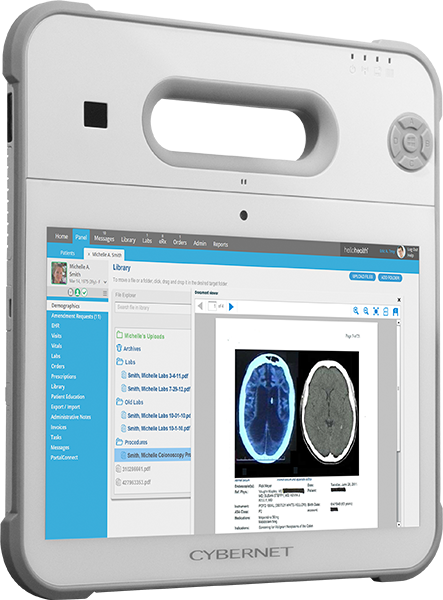
Solution: As with the previous category, the best change most hospitals can make is to use equipment that is lighter, smaller, and more flexible. For example, medical tablets are lightweight and are much easier for providers to carry during a shift, while still fulfilling essential tasks like charting and telehealth. Accessories like carrying straps and handles also allow providers to carry the tablet however they’re most comfortable, further reducing the strain on their bodies.
Pathogen Transmission
Problem: Similar to the HAI issue that patients face, providers must also be constantly aware of infection risks. When dealing with infectious diseases, providers must take every precaution necessary to protect themselves and, by proxy, everyone they come into contact with.
Solution: Fortunately, this is one of the threats that providers are already trained against. Personal sanitation, cleaning, and disinfection protocols are practices any self-respecting doctor, nurse, or technician will uphold, and this is enough to protect them from most infectious threats. To supplement, hospitals should focus on providing the necessary personal protective equipment for extreme cases and pandemic scenarios.
Cable Clutter
Problem: Electronic medical devices are an integral part of modern healthcare workflows, but their constant need for electricity poses a serious but often unacknowledged issue for providers. Cables are a constant tripping hazard for workers on the move, and clustering multiple carts or devices around an outlet can impede foot traffic and create chokepoints in the hospital ward.
Solution: Once again, battery-powered medical computers enjoy a significant advantage here, as they don’t rely on cables to recharge. Instead, providers simply replace drained batteries with freshly charged units, which recharge via a docking station that can easily fit on a desk or table, away from foot traffic.
Workplace Violence and Abuse
Problem: Sadly, workplace violence is a serious issue for healthcare workers, who face verbal harassment, mental abuse, and physical attacks with distressing regularity. In fact, the US Bureau of Labor Statistics has found that they are five times more likely to experience violence than other occupations.
Aside from the obvious danger this poses to providers, constant abuse is a serious contributor to burnout, leading healthcare professionals to seek employment elsewhere or leave the sector entirely, exacerbating the ongoing issue of staff turnover and labor shortage the healthcare sector currently faces.
Solution: Hospitals and healthcare groups must treat violence against their employees as seriously as they treat infection control and trauma response. This includes hiring dedicated security staff, de-escalation and crisis response training for providers, and investing in alarm and response systems that alert teams to the crisis at hand.
Make Your Hospital Safer with Cybernet Manufacturing
Protecting patients and providers alike from infections, accidents, and injuries requires more than hand sanitizer at every corner and comfortable shoes. Safety efforts must be pursued with the same level of support as the integration of new technology or the adoption of new treatment methods.
If your hospital or healthcare group needs electronic devices that are safer and easier to use, contact the experts at Cybernet Manufacturing. Our range of medical computers and tablets is designed to be lighter and more comfortable to use, whether as a handheld device or mounted on a chart. Combined with convenient carrying straps and handles, anti-glare filters, and other customization features, these devices make work easier and less stressful for providers.