The food, beverage, and pharmaceutical industries value precision, reliability, and safety in their workflows. A production-line failure costs thousands of dollars in ruined products for every hour it takes to get back up and running. Even worse, if spoiled food or defective medicine gets on the market, it can lead to costly recalls and liability lawsuits.
Reliable industrial-grade computers ensure that production flows smoothly, errors get flagged immediately, and workers are kept safe.
Supporting Automation on the Production Line
While food still has to be grown on the farm, getting it from there to the table is a complicated process that requires significant automation to meet society’s insatiable demand. Pharmaceutical production is an extension of this, with precise amounts of chemicals combined in the exact way to produce useful, life-saving medicines.
Some of the most important automation-related tasks that industrial computers enable or support on the production line for food, beverages, and pharmaceuticals include…
- HMI (Human Machine Interface) controls that enable workers to control their machines
- ERP access to better manage various workflows like production, supply chain management, and communication between departments
- Recipe management, ensuring that the correct products receive the correct ingredients
- Batch tracking, to ensure food and beverage products move through the production process smoothly and enable easier recalls if the need arises
- Labeling and packaging, to ensure products are properly labeled and safely packaged for transportation and sale
- Equipment monitoring, to detect early warning signs of mechanical failure and alert maintenance teams
- Quality control, monitoring products for defects like early signs of rot or mislabeled packaging using technology like machine vision
- Data collection and documentation, to track KPIs and identify areas of improvement
A typical industrial PC used in the food or pharmaceutical production process will handle several of these tasks, often at the same time. If you’d like to see how Cybernet’s industrial computers handle multitasking, we offer a risk-free evaluation program so you can test our products.
Requirements for Industrial Computers…
Whether on the packaging floor or in the pharmaceutical cleanroom, computers in these industries face far higher demands than in an office or home environment. Any device deployed in these roles must be truly industrial-grade. While both settings require reliable designs and 24/7 capability, they also have different priorities worth exploring.
On the Production Floor
In a food or beverage processing plant or packaging area, industrial computers must handle a wide range of physical stresses. The most important features for these computers to include are:
- Ingress Protection: Any industrial process, including food production, can be messy. Airborne particles, high amounts of moisture, and liquid sprays can easily damage a computer’s internal components if they infiltrate the casing. Industrial computers are designed with ingress protection to block these threats from entering.
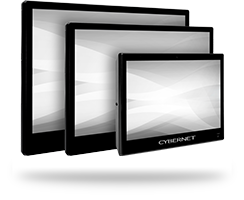
- Flat Front Surfaces: The front surface of an industrial all-in-one PC must be flat, with no edge or rim around the screen. Otherwise, dust and food particles can get caught in that rim and become a sanitary hazard.
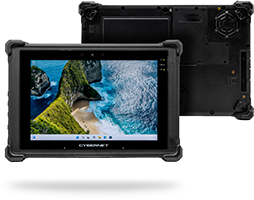
- Vibration and Shock Resistance: Computers mounted on conveyor lines or built into industrial-scale cooking machines regularly face heavy vibrations and infrequent shocks. Truly rugged computers use vibration-resistant design features (such as soldering components directly onto the motherboard) and components (such as SSDs instead of HDDs). Ideally, they will be tested to IEC 60068-2 standards to prove their durability.
- Accurate, Responsive Touchscreens: Workers in food production plants often have wet hands or wear nitrile gloves, which can lead to false positives and missed inputs when using a PCAP touchscreen. Industrial all-in-one PCs use touchscreens that are carefully calibrated to detect genuine inputs while filtering out everything else.

In the Cleanroom
Computers used in pharmaceutical production, particularly in cleanrooms, may not face the same physical stresses as other roles, but they must still meet exacting standards for reliability and design features. The most important considerations for cleanroom computers include:
- Ingress Protection: Similar to computers in food production, cleanroom computers must have a high degree of ingress protection, albeit for a different reason. Every surface in a cleanroom must be regularly cleaned and disinfected, and computers and displays are no exception. Sealed front bezels protect the components inside from leakage. This is why Cybernet’s computers implement IP65-rated front bezels to support frequent sanitation protocols.
- Fanless Cooling: Airflow inside a cleanroom must be tightly controlled so that dust and airborne particles don’t affect operations within it, as specified by ISO 14644-1. Fan-based cooling, which blows hot air away from and cool air towards a computer’s components, disrupts this delicate control and spreads particles throughout the environment. Thus, cleanroom computers must use fanless cooling solutions to prevent this.
- Electromagnetic Interference (EMI) Protection: Pharmaceutical cleanrooms often use precise but delicate equipment that can easily be disrupted by EMI from other electronics. Any industrial-grade computer must have EMI protection features built into its design to prevent these issues
Key Benefits of Computers in Food, Beverage, and Pharmaceutical Production
By implementing reliable industrial computers throughout their operations, food, beverage, and drug manufacturers create workspaces that are more efficient, more flexible, and safer to be in.
- Real-Time Monitoring and Quality Control: Industrial computers can support advanced monitoring and QC methods like machine vision technology, which uses advanced cameras to spot details in products, such as faulty packaging or early signs of rot, preventing these defective products from reaching the shelf.
- Precision Control Over Workflows: Computer-controlled automated machinery is proven to be more efficient and precise than hand-performed tasks, especially at the scale the modern food industry requires. This includes less waste, less over- or under-filling bottles, and fewer drugs lost due to poor mixing.
- Faster, Easier Changeovers: Computer-controlled production also makes it easier to switch from one product to another. Rather than manually recalibrating every machine in the line to change recipes, a single computer can issue the necessary commands with the press of a button.
- Enables Predictive Maintenance: Along with managing their functions, computers can monitor machinery for early signs of failure, such as excessive vibrations or abnormal temperature spikes. Identifying these warning signs early on lets maintenance teams address them before they cause a full breakdown and expensive unplanned downtime.
- Remote Operation in Hazardous Environments: Food production processes like cooking, butchering, and working near running machinery in general are hazardous for workers. By placing the worker at a computer terminal rather than near the machinery, food and drug producers reduce the risk of workplace injury.
- Regulatory Compliance and Traceability: Both the food and drug industries are legally required to electronically trace production batches, such as under FSMA 204 and the Drug Supply Chain Security Act. Placing computers and scanning equipment throughout the production and shipping process supports your compliance efforts.
Production Floor-Ready Computers from Cybernet Manufacturing
As Earth’s population continues to grow, the demand for more food will only grow as well. Answering this demand requires production processes that are more efficient, supported by industrial-grade computers that enhance workflows by:
- Simplifying tracking and recall procedures
- Automating repetitive workflows
- Preventing unplanned downtime caused by mechanical breakdowns
- Reducing waste
If you’re looking to upgrade to rugged, reliable computers to support your production process, contact the experts at Cybernet Manufacturing. With decades of experience in designing and manufacturing computers for challenging workspaces, our products boast a 0.5% failure rate year-over-year, ensuring support when you need it most.